Cross-border e-commerce has moved from a growth tactic to an operating discipline. The businesses doing it well in 2026 are not the ones with the cleverest marketing — they are the ones who treat customs, fulfilment, payments and tax as core infrastructure rather than as problems to solve later.
This guide walks through the six decisions that determine whether an international channel makes money.
Decision 1: Which Market, and How Deep
The instinct is to sell everywhere. The better approach is to pick one market and build properly, because every additional country multiplies your compliance, tax, logistics and support obligations.
Choose based on:
- Demand density. Is there enough addressable volume for your specific category, not just for e-commerce generally?
- Regulatory load. Some categories — medical, cosmetic, food, electrical — carry registration requirements that take months. Factor the timeline in.
- Duty position. Your country of origin’s tariff treatment in the destination market changes your entire margin structure.
- Logistics maturity. Reliable domestic delivery infrastructure in the destination market is a prerequisite, not a nice-to-have.
- Payment culture. Preferred payment methods vary enormously and directly affect conversion.
Go one market deep before going three markets wide.
Decision 2: Direct Cross-Border, or Local Presence
There are three broad operating models.
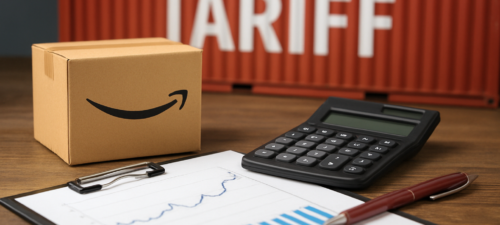
Ship-from-origin. Every order travels internationally. Low setup cost, no inventory risk in market, but slow delivery, per-parcel customs exposure and poor returns economics. Since the end of duty-free small parcels in the US, this model has lost most of its advantage — every package now needs formal entry and carries duty and processing costs.
Local stock, foreign entity. You hold inventory in the destination market through a 3PL but remain a foreign company. Faster delivery, better returns, but importing as a non-resident adds complexity around bonds, importer-of-record status and tax registration.
Local entity with local stock. You register a company in the destination market and operate as a domestic business with imported supply. Highest setup cost, lowest friction thereafter — domestic banking, straightforward importing, buyer trust, easier B2B sales.
Most businesses that scale end up at the third option. The question is when to make the move, not whether.
Decision 3: Getting Customs Right
Customs is where cross-border e-commerce margins are won or lost.
Classification. Every product needs a correct tariff code. The code determines the duty rate and, often, whether additional trade measures apply. Getting it wrong is expensive in both directions — overpayment you never notice, or underpayment that surfaces as a penalty.
Country of origin. Origin is determined by where substantial transformation occurred, not where the goods shipped from. Documentation must support the claim.
Valuation. Declared value must reflect the actual transaction value. Under-declaring is fraud and the enforcement environment is not forgiving.
Entry mechanics. With low-value exemptions suspended in the US, formal entry, brokerage and bonds now apply to shipments that previously moved without them. The fixed costs of compliance fall hardest on small shipments, which is why consolidation into fewer, larger shipments has become the standard response.
Documentation. Commercial invoice, packing list, bill of lading or airway bill, certificate of origin where applicable, and category-specific regulatory documents. Incomplete paperwork means detention, and detention means demurrage.
Decision 4: Fulfilment and Returns
Delivery expectations in developed markets are set by domestic retailers, not by what is reasonable for an importer. You are judged against two-day delivery whether that is fair or not.
Practical structures:
- Marketplace fulfilment for small, fast-moving goods where platform logistics give you speed and conversion.
- Third-party logistics in-market for control, multi-channel service and flexible packaging.
- Own warehouse once volume justifies it, particularly for large or configurable products.
Returns deserve separate planning. Returning goods across a border is usually uneconomic. The realistic options are a domestic returns address with local inspection and restocking, refund-without-return below a value threshold, or local disposal. Decide the policy before launch, because an unplanned returns process erodes margin quietly and continuously.
Decision 5: Payments, Currency and Cash Flow
Three separate problems get lumped together here.
Acceptance. Offer the payment methods local buyers actually use. Card coverage varies, digital wallets dominate in some markets, and B2B buyers frequently expect invoicing terms rather than card payment.
Repatriation. Getting funds from the destination market back to your operating base involves currency conversion, transfer fees and sometimes regulatory reporting. Spread over a year, conversion spread is a real cost line.
Cycle length. The cash cycle in cross-border trade is long — pay supplier, pay freight, pay duty, wait for clearance, wait for receiving, sell, wait for platform disbursement. Ninety to 150 days is normal. Model it explicitly and hold a reserve; more cross-border businesses fail on liquidity than on demand.
Decision 6: Tax and Legal Obligations
Marketplace facilitator rules mean platforms often collect and remit consumption tax on your behalf, which is convenient and also easy to misread as “tax is handled.” It is not, once you sell off-platform.
Areas to check with a professional in the destination market:
- Consumption tax registration thresholds for direct sales
- Corporate tax exposure created by holding inventory or an entity in-market
- Import tax treatment and recoverability
- Product liability and consumer protection obligations
- Data protection requirements for customer records
- Labelling, language and safety marking requirements
None of these are optional, and all are cheaper to get right at setup than to correct later.
A Practical Launch Sequence
For a business starting from zero, this order works:
- Select one market and one focused product range.
- Confirm regulatory feasibility for that range in that market.
- Model landed cost per unit, fully loaded.
- Decide the entity structure and set it up.
- Appoint a customs broker and put a bond in place.
- Choose the fulfilment model and secure warehouse or 3PL capacity.
- Set up payments and tax registration.
- Ship a small first consignment and run the whole cycle end to end.
- Fix what broke.
- Scale volume, then scale range, then scale markets.
Steps 8 and 9 are the ones businesses skip when they are in a hurry, and they are the ones that prevent expensive mistakes at volume.
What Separates the Businesses That Succeed
They pick one market and build depth. They price from landed cost, not factory cost. They hold stock in-market. They treat compliance documentation as a sales asset rather than a burden. They plan returns before the first return arrives. And they hold enough working capital to survive the gap between paying and being paid.
Cross-border e-commerce in 2026 rewards operational seriousness. The rules are more demanding than they were, which is exactly why the businesses that meet them face a thinner field.
PROMIXCO USA Corporation operates the group’s US e-commerce and global trade channel, combining international manufacturing with a domestic entity for importing, sales and support. To discuss a cross-border project, get in touch.