The FBA vs FBM decision is usually framed as a beginner’s question, which is why so many sellers get it wrong at scale. It is not a one-time choice between a convenient option and a difficult one. It is a per-SKU economics decision that changes as your product mix, order volume and cost base change.
Here is a practical framework for making that call in 2026.
What Each Model Actually Commits You To
Fulfilment by Amazon (FBA) means you ship inventory into Amazon’s network and Amazon picks, packs, ships, handles customer service and processes returns. You get Prime badging, higher conversion, and access to Buy Box advantages. You give up control over inventory placement, packaging, storage cost and the returns process.
Fulfilment by Merchant (FBM) means you hold stock and ship orders yourself, from your own warehouse or a third-party logistics provider. You keep control of packaging, service and stock. You take on the operational load and, unless you qualify for Seller Fulfilled Prime, you sell without the Prime badge.
That is the textbook version. The decision in practice comes down to five variables.
Variable 1: Product Physics
This is the single strongest predictor.
FBA economics work well for items that are small, light, durable, non-hazardous and consistent in dimensions. Fulfilment fees scale with size and weight, and storage fees scale with cubic feet and how long the unit sits.
FBM economics work better for anything bulky, heavy, fragile, oversized, configurable or assembled to order. Hospital beds, examination tables, large cabinets, physiotherapy equipment and office furniture all fall firmly on the FBM side. The FBA fee on an oversized unit can wipe out the margin before a single ad click is paid for.
Rule of thumb: if the unit is under about two kilograms and ships in a standard-size box, model FBA first. Above that, model FBM first.
Variable 2: Velocity and Storage Duration
Amazon charges for space and charges more when the space is used inefficiently. A SKU that sells steadily every week costs very little to store. A SKU that sells three units a month accumulates storage fees, then long-term storage surcharges, then aged-inventory penalties.
Look at your sell-through rate per SKU:
- High and predictable → FBA is usually cheaper per order and always faster.
- Low, lumpy or seasonal → FBM avoids paying rent on stock that is not moving.
- Unknown, new launch → start FBM in small volume if you can, prove demand, then move the winners into FBA.
Variable 3: Margin Structure After Landed Cost
For overseas sellers this is where the analysis gets sharp. Duties and freight now sit on top of every unit before Amazon’s fees begin. If your landed cost has risen 15–30% because of tariff and customs changes, the FBA fee layer may no longer fit inside the remaining margin.
Build the comparison per unit, not per order:
FBA cost stack: landed cost + inbound placement + fulfilment fee + monthly storage + referral fee + returns processing + advertising.
FBM cost stack: landed cost + warehouse rent or 3PL pick-and-pack + outbound shipping + packaging + labour + referral fee + returns handling + advertising.
FBM often looks cheaper on the spreadsheet and more expensive in reality, because the labour and error costs are easy to underestimate. FBA often looks expensive on the spreadsheet and cheaper in reality, because the conversion lift from Prime is real. Model both honestly and accept that the answer differs by SKU.
Variable 4: Conversion and the Prime Badge
Prime eligibility raises conversion, particularly in consumer categories where delivery speed is part of the purchase decision. If two identical listings sit side by side and one is Prime, the Prime one wins the majority of the traffic.
Three ways to think about it:
- In fast, competitive consumer categories, going FBM without Prime means accepting a structural conversion disadvantage. FBA usually earns its fee.
- In B2B, institutional and technical categories, buyers care about specification, lead time, warranty and documentation more than two-day delivery. The Prime disadvantage is much smaller.
- Seller Fulfilled Prime is a middle path, but it demands strict on-time shipping performance, weekend coverage and nationwide delivery speed. Only attempt it with a mature warehouse operation.
Variable 5: Control and Customer Experience
FBM gives you things FBA cannot:
- Custom packaging, inserts, manuals and branded unboxing.
- Assembly, calibration or pre-delivery inspection.
- Direct conversation with the customer about installation or specification.
- Control over how returns are inspected and restocked, rather than accepting Amazon’s grading.
- The ability to serve a wholesale or contract order out of the same stock pool.
For a manufacturer, that last point matters more than it first appears. Inventory sitting in an Amazon fulfilment centre is committed to one channel. Inventory in your own US warehouse can serve marketplace orders, direct e-commerce orders, distributor orders and tender deliveries from the same pallet.
The Hybrid Model Most Sellers End Up With
Very few mature sellers run purely one model. The common structure looks like this:
- FBA: fast-moving consumables, accessories, apparel, small devices — anything where speed sells and size is small.
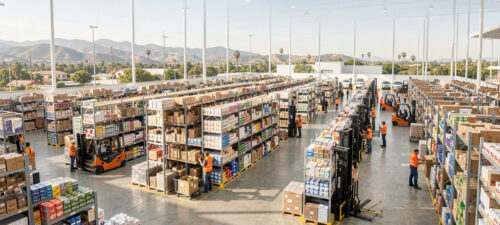
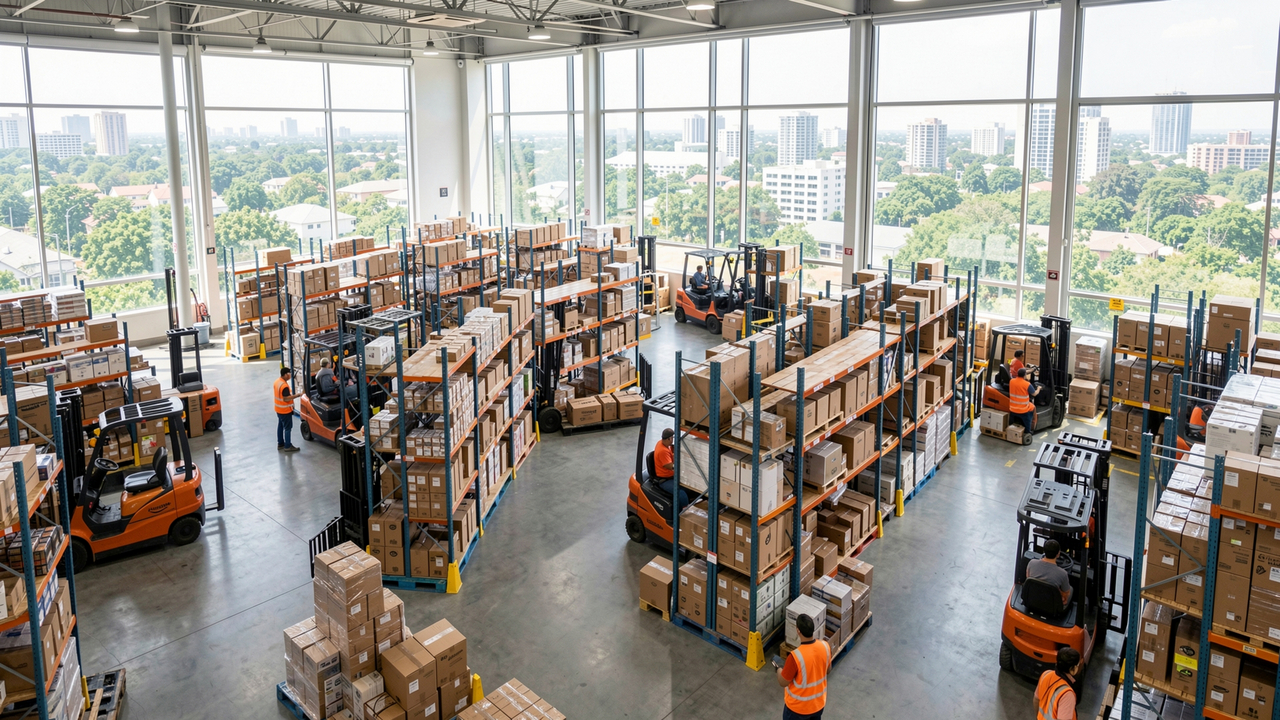
- FBM from a US warehouse: furniture, large equipment, custom configurations, high-value items, slow movers and anything requiring assembly or inspection.
- Overflow buffer: reserve stock held at the warehouse and used to replenish FBA, so you are never fully dependent on an inbound ocean shipment arriving on schedule.
That third element is the underrated one. Holding a domestic buffer converts a six-week restock crisis into a three-day transfer.
A Simple Decision Checklist
Run each SKU through this:
- Is the unit under 2 kg and standard-sized? If no, lean FBM.
- Does it sell at least weekly? If no, lean FBM.
- Does the FBA fee stack leave at least 20% net margin after advertising? If no, lean FBM.
- Is delivery speed a major purchase driver in this category? If yes, lean FBA.
- Does the product need assembly, inspection, custom packaging or technical support? If yes, FBM.
- Do you already hold US warehouse capacity? If yes, FBM becomes cheaper by default.
Three or more answers pointing one way is usually a clear enough signal.
Reviewing the Decision
Treat fulfilment as a quarterly review item, not a permanent setting. Fees change, freight rates change, duty rates change, and your own sales velocity changes. A SKU that belonged in FBA last year may belong in FBM this year, and vice versa. Sellers who re-run the numbers each quarter consistently outperform those who set it once.
Where PROMIXCO Sits
PROMIXCO USA Corporation runs a hybrid model because its catalogue spans both extremes — small consumables and apparel on one side, hospital and office furniture on the other. Group manufacturing supplies the goods; the US entity handles importing, warehousing and domestic delivery, which allows marketplace, direct and contract orders to be served from a single inventory pool.
If you are weighing FBA vs FBM for your own catalogue and want a second opinion on the numbers, talk to our team.